
Pooja Room Interior Design in Trichy – Modern and Traditional
A pooja room is more than a corner with idols. It reflects faith, family tradition, and the character of your home. This guide walks through Vastu placement, design styles, materials, lighting, and cost for a pooja room interior design suited to homes in Tiruchirappalli—whether you want a classic mandir design for your home or a compact modern unit.
Best Vastu Guidelines for Pooja Room Interior Design
Vastu principles shape both the placement and feel of a Hindu pooja room design. Getting the direction right early avoids rework later.
Independent houses in Tiruchirappalli usually have room to follow these placements exactly. In apartments where the northeast corner isn’t available, an east-facing wall works as the next best option for pooja room decor.
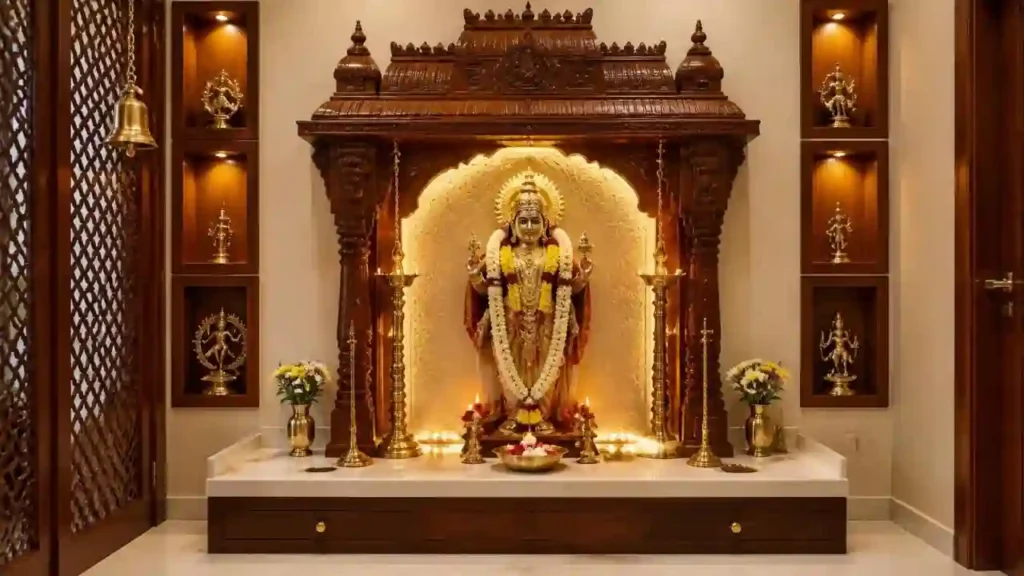
Traditional Pooja Room Interior Designs
Traditional pooja mandir designs remain popular across Tamil Nadu for their connection to temple architecture.
- Teak wood with brass detailing for a classic feel
- Marble flooring with wooden pillars
- Gopuram-style arches for a temple-like look
- Hand-carved motifs like lotus, peacocks, or deities
A traditional pooja room design often includes a small bell at the entrance and a raised threshold, both tied to ritual practice. These details cost little but add meaning that families value for generations.
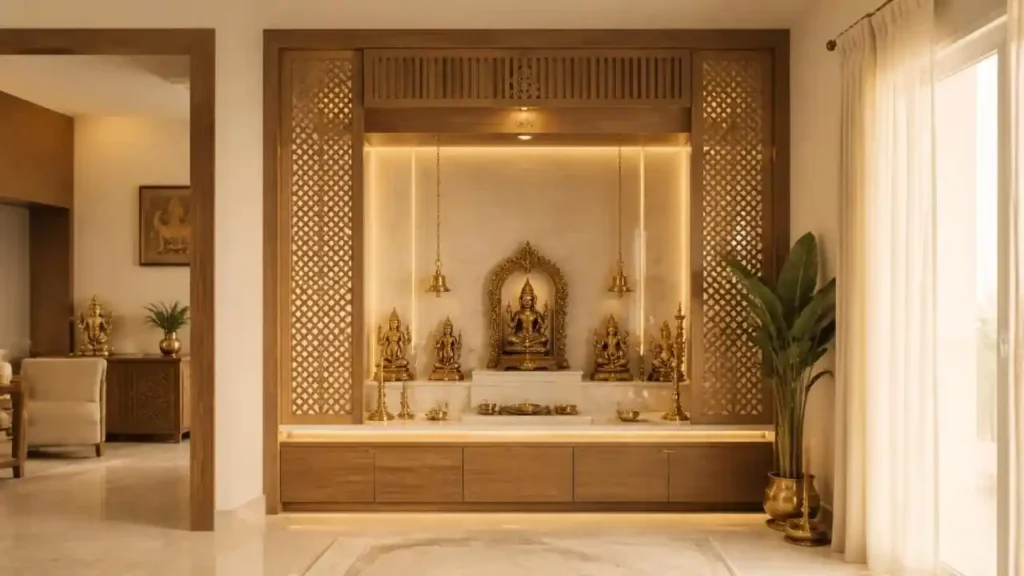
Modern Pooja Room Designs for Apartments
Apartment living demands smart, space-efficient pooja room designs that maintain both functionality and spiritual comfort without occupying too much room.
- Wall-mounted units with sliding or folding doors save floor space.
- Minimal wood tones like white oak or light teak suit modern apartment interiors.
- Concealed storage for pooja items keeps the unit looking clean day to day.
- Single-panel jaali doors replace bulky double-door designs.
A well-planned pooja unit for a 2 or 3 BHK flat can fit into a hallway nook or a living room corner without needing a dedicated room. This approach works well for new homeowners in areas like Thillai Nagar or Cantonment.
Best Wood and Material Choices for Pooja Room Interiors
Material choice affects both appearance and how well the unit holds up
- Sheesham wood gives a warmer tone and works for carved panels
- Teak wood: handles humidity well and suits detailed pooja cupboard designs.
- MDF with laminate fits tighter budgets but needs a moisture-resistant coating.
- Marble inlays on the base add a temple-like finish without high cost.
For a mandir design for a home that balances cost and durability, many designers recommend teak for the frame and marble for the flooring inside the unit. This pairing resists termites and keeps carvings intact longer.
Pooja Room Lighting Ideas
Lighting shapes the mood of the space more than any single design element.
- Brass diyas near the idols keep the traditional character intact.
- Backlit LED panels behind jaali or marble work highlight carved detail.
- Strip lighting along shelf edges adds depth to puja room interior design without extra bulk.
Dimmable lighting lets you switch between bright light for rituals and a softer glow for evening prayers—a small addition that makes a noticeable difference in pooja room decoration ideas.
Pooja Room Interior Design Ideas for Small Homes
- Corner units use otherwise wasted space in a living room or hallway.
- A single pooja shelf design with drawers below combines display and storage.
- Foldable doors save swing space compared to hinged doors.
- Vertical layouts work better than wide layouts in small pooja room design ideas.
Combining storage and display in one shelf keeps daily pooja items within reach without cluttering the visual space.
Pooja Room Door and Wall Design Ideas
Doors and walls frame the entire pooja experience and are often the first design detail guests notice.
- Carved wooden doors with floral or temple motifs suit a traditional pooja room door design.
- Jaali lattice patterns let light and incense smoke pass through naturally.
- Textured wall panels in gold or maroon tones add depth behind the idols.
- Arch-style frames bring a South Indian temple feel to the entrance.
A single-panel jaali door works well in smaller pooja rooms, giving the visual effect of a traditional pooja door design without the space a double door needs.
Cost of Pooja Room Interior Design
Pooja Unit Cost Guide
Material, design and cost considerations
| Pooja Unit Category | Material / Design | Cost Impact |
|---|---|---|
| Basic | MDF unit with simple design | Budget-friendly and cost-effective |
| Mid-range | Teak / Sheesham with carved detailing | Moderate cost; higher due to quality wood and detailing |
| Premium | Marble + wood with backlighting, temple-style design | Higher cost due to premium materials, lighting, and elaborate craftsmanship |
| Elaborate Designs | Full-wall coverage, jaali detailing, backlit elements | Significantly increases the overall expense |
| Additional Consideration | Site visit and electrical work for lighting | Helps finalize an accurate budget and avoid unexpected costs |
Note:
The final cost depends on the size, wood type,
design complexity, and electrical requirements.
A site visit before finalizing the budget is recommended,
especially when backlighting or other electrical work is involved.
How to Choose the Right Pooja Room Interior Designer
The right designer turns a good plan into a pooja room that works daily. Looking for expert pooja room interior design in Tiruchirappalli? Get a free consultation and a customized mandir design that fits your space, Vastu requirements, and family traditions.
• Check past pooja room projects
• Contact for design consultation
• Ensure post-installation support
A designer familiar with home temple design and Tamil pooja traditions understands placement rules and ritual needs, not just aesthetics. Local experience in Tiruchirappalli also helps when sourcing wood suited to the region’s humidity.
Frequently Asked Questions
Use wall-mounted shelves, compact diyas, and minimal pooja room design elements to create a simple yet devotional space. Keep the layout clean and space-efficient.
Add warm lighting, a clean backdrop, brass idols, and fresh flowers daily. Maintaining a clutter-free space enhances the spiritual and peaceful atmosphere.
Carved wooden doors or jaali lattice designs work best. They allow light and air to pass through while maintaining a traditional and elegant look.
Traditional designs include carved wooden doors, marble flooring, brass idols, temple-style arches, and warm lighting that reflects South Indian heritage.
Gold, maroon, and cream tones create a rich and devotional feel, while white and light wood tones offer a calm and modern spiritual ambiance.