
Choosing between a gypsum and POP ceiling depends on your design preferences, budget, room conditions, and installation requirements. Gypsum ceilings are lightweight and provide a smooth finish, making them suitable for clean, modern designs. POP ceilings offer greater flexibility for curves, mouldings, and detailed decorative work because they are shaped on site. Before deciding, consider installation time, moisture exposure, maintenance, ceiling design, and the quality of workmanship.
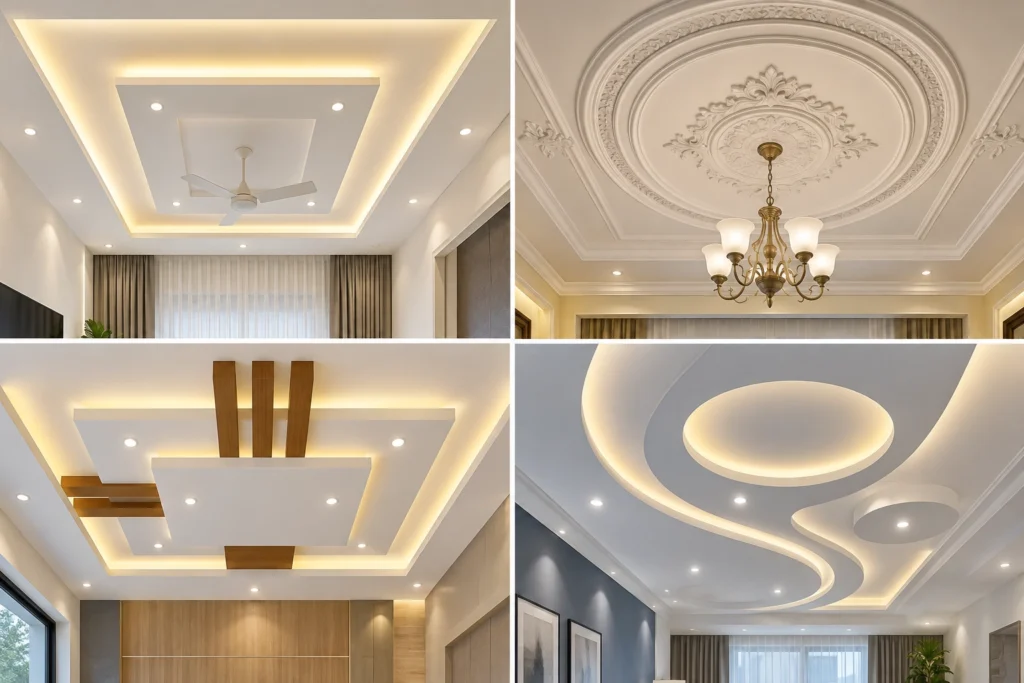
Gypsum and POP ceilings are both common choices for false ceilings, but they differ in material, design, installation, and maintenance. The table below gives a simple comparison:
Factor | Gypsum Ceiling | POP Ceiling |
Material | Prefabricated gypsum boards | Plaster of Paris applied on site |
Installation | Boards are fixed to a framework | POP is mixed, shaped, and applied on site |
Finish | Smooth and uniform | Smooth with greater scope for decorative details |
Design Flexibility | Suitable for clean, modern designs | Suitable for curves, mouldings, and detailed designs |
Installation Time | Can be faster because boards are ready to use | Usually requires more on-site preparation and drying |
Durability | Can be durable with proper installation and maintenance | Can also be durable with proper installation and maintenance |
Moisture | Moisture-resistant options are available | Suitability depends on room conditions and application |
Best Choice Depends On | Design, room conditions, budget, and workmanship | Design, room conditions, budget, and workmanship |
Gypsum vs POP ceiling durability and lifespan
- Material quality: Durability depends on the quality of the material used.
- Gypsum ceiling: Can remain durable when properly fixed, maintained, and protected from moisture.
- Moisture: Water exposure can damage standard gypsum boards. Moisture-resistant products may be more suitable for humid areas.
- POP ceiling: Can last for many years when correctly applied and protected from persistent moisture.
- Possible damage: Cracks or surface damage may occur due to structural movement, poor workmanship, or unsuitable conditions.
- Lifespan: Neither material has a fixed lifespan for every home.
- Maintenance: Regular inspection and prompt repairs can help extend the ceiling’s service life.
Gypsum vs POP ceiling moisture resistance
- Gypsum ceiling: Standard gypsum boards can be affected by prolonged moisture or water exposure.
- Moisture-resistant gypsum: Often considered for areas with higher humidity.
- POP ceiling: Not ideal for constant moisture exposure, as persistent dampness can affect the surface and finish.
- Waterproofing: Neither gypsum nor POP should be considered completely waterproof.
- Bathrooms and kitchens: Proper ventilation and leak prevention are important.
- Product selection: Choose materials based on the room’s moisture level and product specifications.
- Installation: Good workmanship is important for maintaining the ceiling’s performance.
- Final choice: Consider moisture levels, design, product type, and installation quality.
- Gypsum ceiling: Uses factory-made boards that are cut and fixed to a metal framework.
- Installation process: Boards are joined, finished, and prepared for the final surface.
- Installation time: Can offer a relatively clean and quick installation.
- POP ceiling: Plaster of Paris is mixed and applied on site over the required framework or surface.
- Design process: POP is shaped according to the desired design and allowed to dry before finishing.
- Time required: Depends on ceiling size, design, site conditions, and workmanship.
- Important factors: Proper measurements, framework, finishing, and electrical planning are important for both options.
Gypsum vs POP ceiling maintenance
- Installation quality: Maintenance needs depend on installation quality, room conditions, and the type of finish used.
- Gypsum ceiling: Needs routine dusting and gentle cleaning to keep the surface neat.
- Gypsum repairs: Damaged boards or joints may require patching or replacement.
- POP ceiling: Needs regular dusting and careful cleaning, especially around decorative mouldings and detailed designs.
- Cracks and stains: Check cracks, stains, or loose sections and repair them promptly.
- Moisture: Address water leaks and prolonged dampness quickly, as they can affect both materials.
- Cleaning: Avoid harsh cleaning methods that may damage the finish.
- Regular inspection: Helps maintain appearance and identify problems early.
Gypsum vs POP ceiling which is better?
- Gypsum: A practical choice for smooth, modern ceiling designs.
- Installation: Ready-made gypsum boards can offer relatively quick installation.
- POP: Suitable for curves, mouldings, and detailed decorative designs.
- Design flexibility: POP can be shaped on site to create custom designs.
- Humid areas: Choose products suitable for the room conditions and manage moisture properly.
- Durability: Both materials can provide good service when properly installed and maintained.
- Choosing the right option: Consider design, installation time, repair needs, room conditions, and budget.
- Workmanship: A skilled installer can make a significant difference to the final result.
Conclusion
Gypsum and POP ceilings can both be good choices, but the better option depends on your design, budget, room conditions, and installation requirements. Gypsum is well suited to smooth, modern designs and can offer relatively quick installation, while POP provides more flexibility for curves, mouldings, and detailed decorative work. For moisture-prone rooms, select a suitable product and address leaks and ventilation properly. Most importantly, choose an experienced installer to achieve a durable and clean finish.
- Experienced professionals: Skilled designers and installers deliver quality workmanship.
- Customised solutions: Designs are tailored to your space, style, and requirements.
- Quality materials: We use reliable materials for lasting results.
- Transparent pricing: Clear estimates help you plan your budget confidently.
- Timely execution: We focus on organised work and timely completion.
- Complete support: From design to installation, our team assists throughout.

Get a Free Consultation
Frequently Asked Questions
Gypsum is generally suitable for smooth, simple, and modern designs, while POP is better suited for decorative designs with curves and mouldings.
POP is better suited to curves, decorative borders, mouldings, niches, and other intricate designs.
Yes, but the material should be selected according to the room conditions. Moisture-resistant gypsum may be suitable for some humid areas, while persistent dampness and water leakage should be avoided with either option.
Gypsum can usually be installed faster because the boards are prefabricated. POP may take more time because it is mixed, shaped, dried, and finished on site. Actual installation time can vary depending on the design and project size.
Consider the design you want, room conditions, installation time, maintenance needs, budget, and the experience of the installer before making a decision.